
How to Stop Drinking Alcohol When You Don't Think You Have a Problem
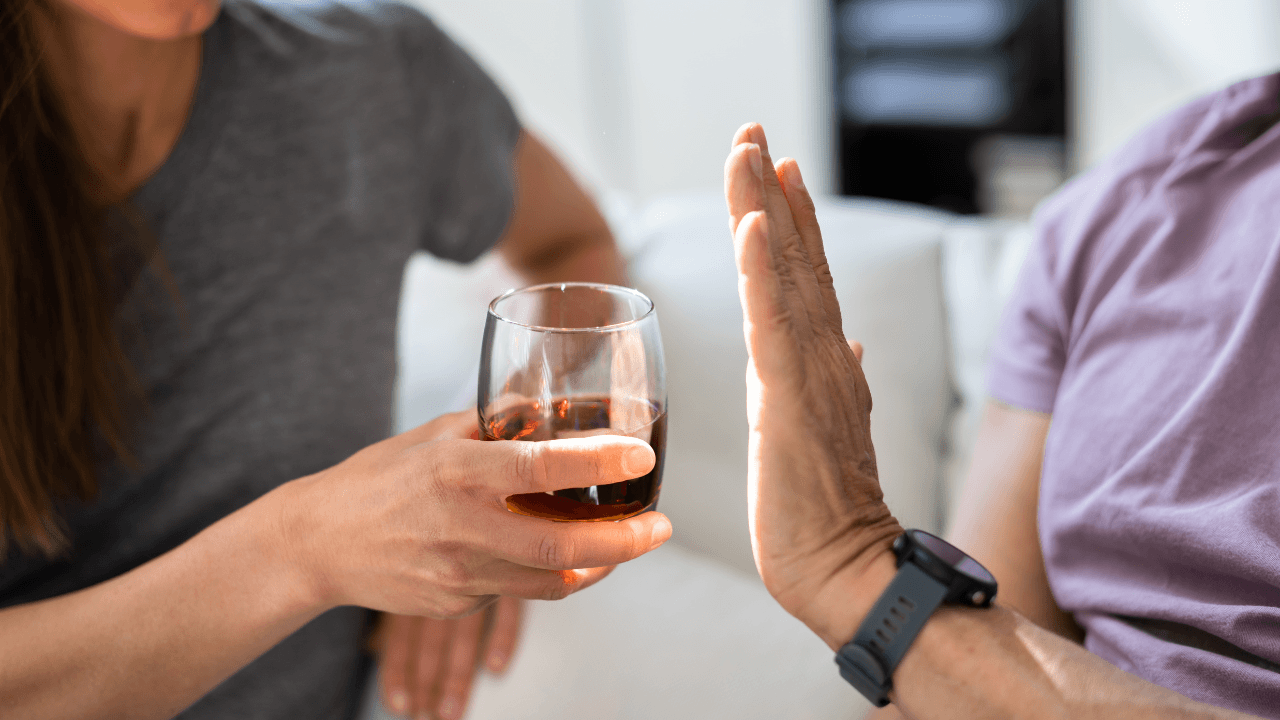
Think alcohol isn't causing you problems?
Here's what I'd actually say to that, and why one week off might just change your mind.
This is one of the most interesting questions I get asked, and the honest answer is: it depends.
It depends on how much you're actually drinking, what role alcohol plays in your life, and perhaps most importantly, how you feel when you don't drink.
I'm Stephanie Chivers, founder of Women Who Don't Drink. I've spent years supporting women to change their relationship with alcohol, and I've seen first-hand how easy it is for drinking to become part of everyday life without ever feeling like you have a "problem".
You don't have to identify as an alcoholic. You don't have to have hit rock bottom. And you don't need a dramatic story before you're allowed to question whether alcohol is working for you anymore.
Let's Start With the Numbers
The UK Chief Medical Officers' alcohol guidelines recommend drinking within the guideline of no more than 14 units of alcohol per week. They also recommend spreading those units over three or more days rather than saving them up for one or two heavy drinking sessions.
It's also worth knowing that there is no completely safe level of alcohol, any amount carries some health risk, and how that risk plays out depends on your individual lifestyle, genetics and overall health.
So, let's put some real numbers around what "I don't have a problem" might look like in practice.
A 750ml bottle of wine at around 13% ABV contains roughly 9.75 units of alcohol.
If you're drinking a bottle every day, that's almost 68 units a week.
That same bottle of wine a day is also approximately 690 calories. Per day. That's 4,839 calories a week just from alcohol. More than two days' worth of food for most women, drunk invisibly.
Alcohol is also empty calories, there is nothing of any use in it.
And financially? A bottle of wine a day averages around £49 a week. That's over £2,500 a year.
We can find problems in any one of those numbers, the units, the calories, the money, before we've even started talking about what that level of alcohol is doing to your sleep, your mood, your anxiety, your skin, your liver, your hormones.
But here's the thing - I'm not trying to frighten you. I'm trying to make it real.
If you're reading this and thinking I don't really have a problem though, I completely understand.
And I'm not here to tell you that you do.
What I'd say instead is this:
Treat it like an experiment.
Be curious. Challenge yourself. Just one week without alcohol.
That's it.
Seven days. Not forever, not a label, not a big announcement. Just a week.
One important caveat
If you drink heavily or regularly and think you might be physically dependent on alcohol, don't suddenly stop drinking without medical advice.
Alcohol withdrawal can be dangerous, and in some cases life-threatening. If you've experienced things such as shaking, sweating, nausea, anxiety or difficulty sleeping when you've gone without alcohol, speak to your GP or an alcohol support service before attempting to stop. NHS advice on alcohol withdrawal and stopping safely
If you're unsure whether this applies to you, that's a good reason to get some professional advice first.
For everyone else, an alcohol-free week can be a really interesting experiment.
Here's why:
Alcohol is a drug. A legal, socially accepted and heavily advertised drug, but a drug nonetheless.
And sometimes, when something is so woven into daily life, we genuinely can't see what it's doing until we step away from it.
We build up tolerance without noticing.
We start to think the way we feel, the tired, the foggy, the slightly anxious mornings, is just normal.
Just getting older.
Just life.
And then we have a week off alcohol, and something shifts.
What Actually Happens When You Take a Week Off?
In my experience, the women I work with often come back after a week alcohol-free and tell me they noticed a difference.
Things like:
"I'm sleeping so much better."
"I have more energy than I've had in years."
"My head is clearer."
"I didn't realise how much it was affecting my mood."
"I've lost a few pounds without doing anything differently."
"I didn't realise how much I was spending."
Now, that doesn't mean everyone will experience all of these things, or experience them after exactly seven days.
But you can't always see the difference alcohol is making until you actually step out of it.
That's not a character flaw.
We adapt to our baseline. Our new normal.
And our baseline quietly shifts without us noticing.
Sometimes you don't realise how tired you were until you aren't.
You don't realise how much mental space alcohol was taking up until you get some of that space back.
And you don't realise how automatic your drinking has become until you make a conscious decision not to do it.
What If You Find a Week Without Alcohol Really Difficult?
This is the bit I really want you to pay attention to.
It can be interesting to notice whether you can actually do it.
Not in a judgmental way.
Just with curiosity.
Because if the idea of a week without alcohol feels genuinely uncomfortable, if you find yourself constantly reasoning around it, or if you try and really struggle, that tells you something.
It doesn't mean you're a bad person.
And it doesn't automatically mean you have an "alcohol problem".
But it may tell you that alcohol has become more ingrained in your daily life than you perhaps realised.
There are lots of reasons why stopping can feel difficult. Alcohol can become tied to routines, emotions, rewards, socialising and the way we deal with stress. Once those connections are established, changing them can feel surprisingly hard.
I've written more about why it's so hard to stop drinking here, because understanding the why can make a huge difference to how you approach change.
If you find that you need support, I'd love for you to get some.
Not because something is wrong with you.
Because you deserve more than white-knuckling it alone.
What Have You Actually Got to Lose?
Seriously. What is the worst-case scenario of one week without alcohol?
You sleep better, feel clearer, save some money, and then decide it's not for you. That's the downside.
The upside is that you might discover your normal doesn't have to feel the way it currently does.
Want to Try It With Support?
If this has sparked something for you, the 5 Day Alcohol Reset is a great place to start, a structured, supported introduction to what alcohol-free life can feel like, without any big commitments or scary labels.
Five days.
Five minutes a day.
A chance to learn something about yourself and understand your own drinking.
Try the free 5 Day Alcohol Reset
I've also done a short video on this topic if you'd rather watch than read - watch the YouTube video here.
The Bottom Line
You don't need to have hit rock bottom to question your drinking. You don't need a dramatic story or a formal diagnosis or a label that doesn't fit.
You just need to be a little bit curious.
One week. That's all. See what you notice.
Written by Stephanie Chivers
Stephanie founded Women Who Don’t Drink after years managing alcohol treatment services. She supports women who want to change their relationship with alcohol without shame, labels or waiting until things become a crisis.
